Articles
Can an empty Melbourne block attract vacant residential land tax?
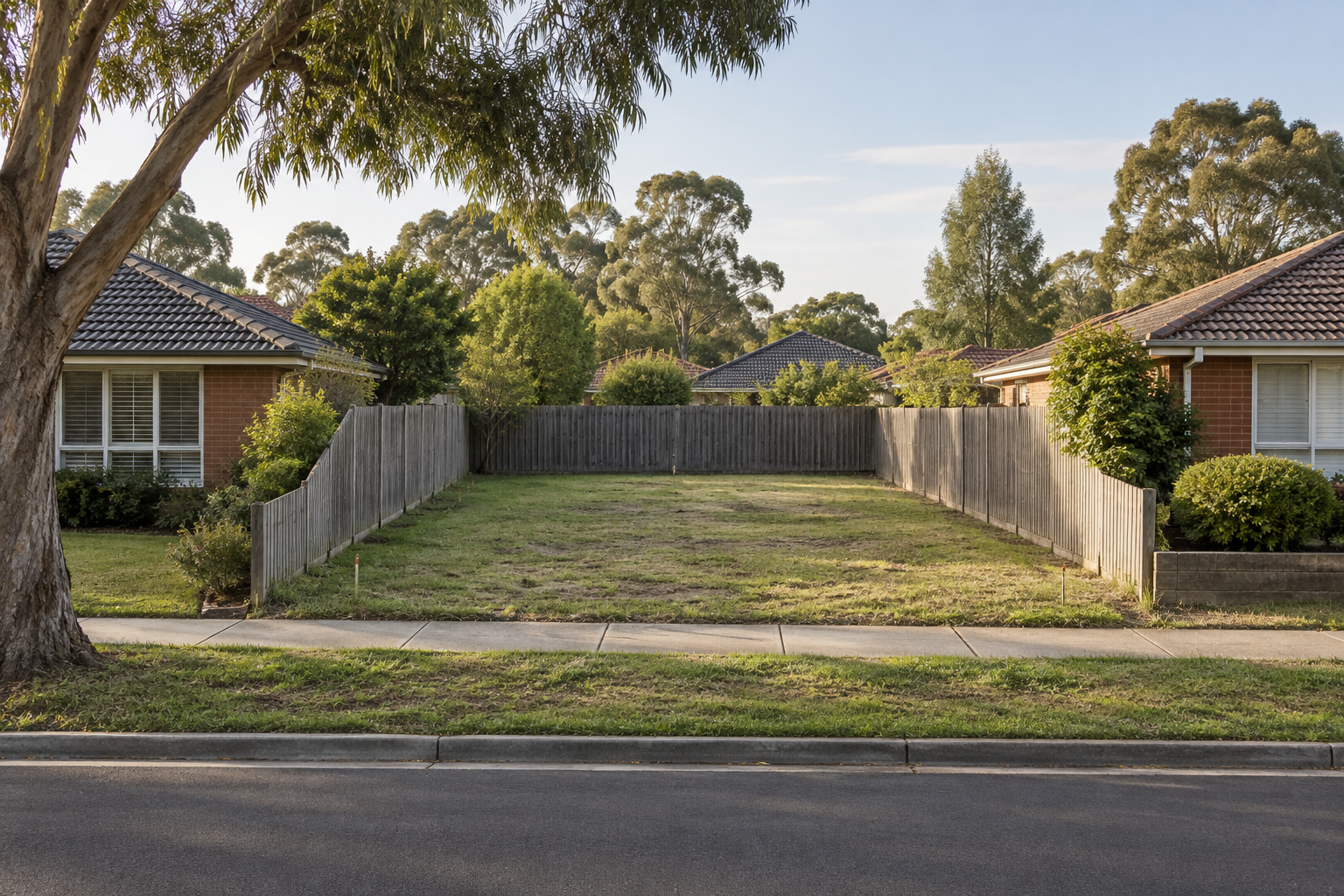
Yes. Since 1 January 2026, certain undeveloped land in metropolitan Melbourne can attract vacant residential land tax (VRLT), even if there is no house on it. The rules target land capable of residential development that has remained undeveloped for at least five continuous years, subject to exclusions and exemptions.
Which blocks are affected?
The rules cover 31 metropolitan council areas, including growth areas such as Melton, Wyndham and Casey. Zoning, actual use and development history matter. Land genuinely used or being developed for a non-residential purpose may fall outside these rules.
The five-year period is measured immediately before the relevant tax year and can include years before 2026. It does not automatically start on 1 January 2026.
A genuine change of ownership breaks that period. However, this does not apply if the Commissioner considers the transfer was made to reduce or avoid VRLT.
How much is the tax?
Qualifying undeveloped land is taxed at 1% of its capital improved value, which includes the land and any improvements. There is no tax-free threshold.
For example, a liable block with a capital improved value of $800,000 would attract $8,000 in annual VRLT. This is additional to any ordinary land tax payable. The escalating 2% and 3% VRLT rates for some other vacant properties do not apply to this category.
Could an exemption apply?
Land incapable of residential development may be exempt. Physical constraints, planning restrictions and restrictive covenants can be relevant.
An adjoining block used for the private enjoyment of a main residence or qualifying holiday home may also qualify, subject to ownership and other conditions. Simply owning the neighbouring block is not enough.
Relief may also be available where a home is to be built but construction has not started for an acceptable reason. It requires the Commissioner's assessment.
What should owners check?
Check the block's zoning, ownership and development history, valuation and exemption position. Before buying, review the property clearance certificate and investigate any outstanding VRLT.
Check notification obligations before 15 February each year, including when claiming an exemption. If already notified, a fresh notification is generally needed only when circumstances change. Missed notifications should be made promptly.
This article provides general information only and is not legal advice. Legal requirements and individual circumstances vary. Obtain advice about your specific situation.